Car Connect

Category :

Immersion, Design Vision, Digital Design, Industrial Design

Client :

Samsung Design Delhi (1 of the 5 Regional Design Studios of Samsung), Samsung Corporate Design Center (Global Design HQ)

Timeline :

2012

Role :

Project Lead, Vision & Conceptualization

01 . The Challenge

Transform the travel experience by making it more engaging and collaborative for active (drivers, cyclists) and passive (commuters, passengers) users. Additionally, explore B2B opportunities for Samsung by adding value to existing mobility solutions with minimal cost and environmental footprint.

  • User Engagement: How can we make travel more interactive and enjoyable for all users?
  • B2B Solutions: How can Samsung leverage its technology to create scalable, value-driven mobility solutions for businesses?
  • Sustainability: How can we enhance mobility infrastructure with minimal cost and environmental impact?

02 . The Solution

A critical part of the process involved understanding key user needs, identifying pain points, and mapping the gaps between existing offerings and emerging expectations. Through design research and contextual inquiry, the team charted a landscape of opportunity—highlighting areas where innovation could deliver meaningful value for both users and OEMs. The project explored possibilities for both retrofitting existing solutions and developing new scenarios tailored to the increasingly digitally aware consumers in emerging markets such as India and other parts of South Asia.

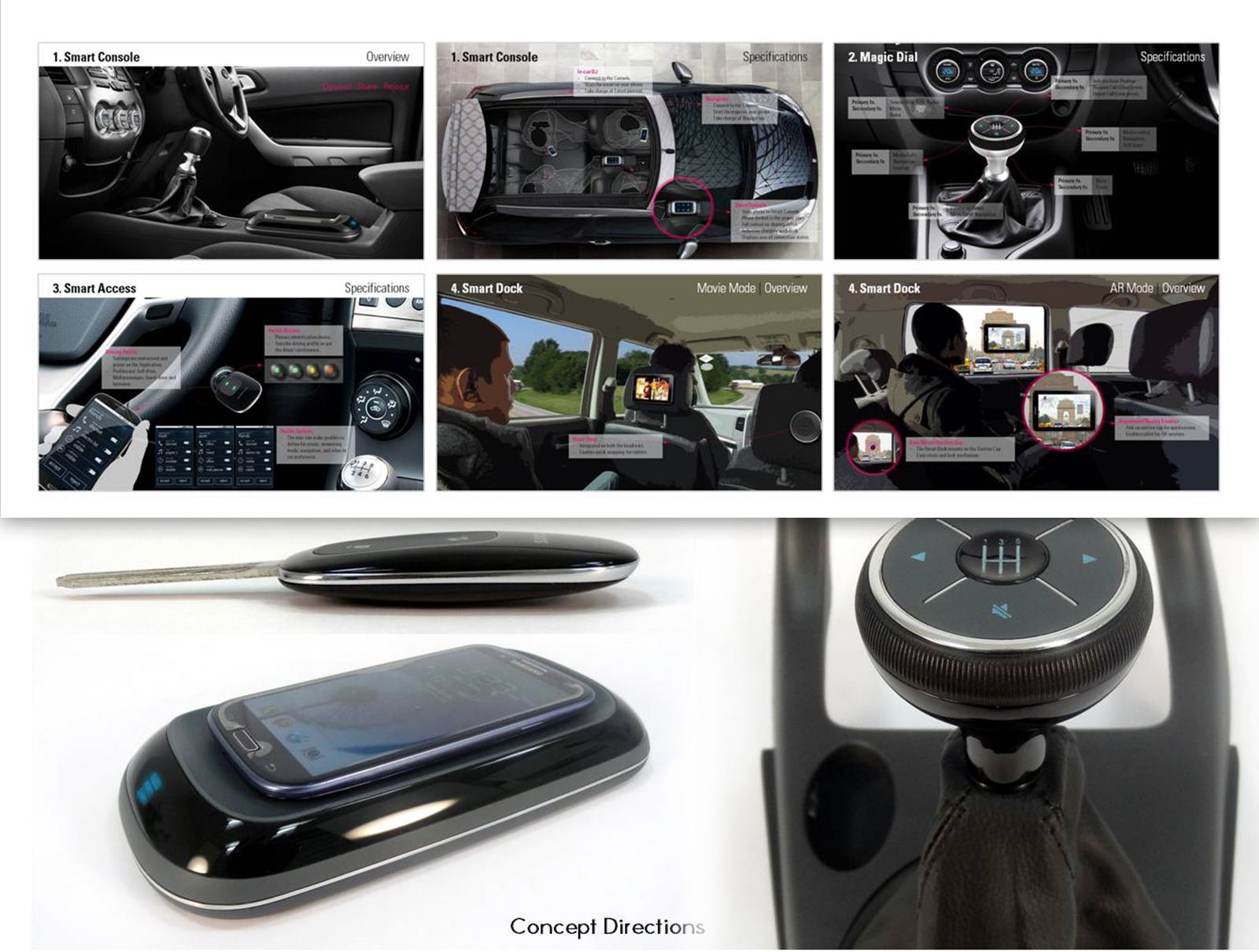
Concepts like Magic Dial and Smart Dock were designed as retrofits that adapt to the current technological landscape. In contrast, ideas like Smart Console and Smart Access introduced entirely new paradigms of interaction and utility, aiming to redefine how users engage with digital systems in their everyday lives.


03 . Key Highlights & Outcomes

It was a bright beginning for Samsung’s B2B enterprise solutions, particularly in the automotive sector—aimed at empowering car manufacturers and OEMs in emerging markets like India and South Asia to innovate on top of a flexible digital platform. The initiative explored both retrofitting possibilities and new experience paradigms, enabling partners to enhance their current offerings while preparing for the future of mobility.

Functional Prototypes Developed:

Key concepts such as Magic Dial, Smart Dock, Smart Console, and Smart Access were translated into 1:1 prototypes to evaluate feasibility and user interaction.

Consumer Focus Groups Conducted:

In-depth focus groups were held to gather feedback from target users, understand behavioral insights, and capture reflections on digital experiences within vehicles.

Insights Applied to Further Development:

Learnings from the prototypes and focus groups guided the refinement of ideas and shaped the direction of subsequent innovation efforts.

Real-World Impact:

Several of these developments influenced future projects and were integrated into the upcoming lineup of BMW’s mid-segment vehicles, highlighting the strategic value of the initiative.